
The custom jersey MOQ (minimum order quantity) is not one universal number. It depends on how the garment will be made.
This guide explains what those two rules mean, why the production routes have different cost structures, and what to send before asking for a quotation.
Custom Jersey MOQ: The Quick Comparison
MOQ means minimum order quantity: the smallest production quantity normally accepted for a specific order route.
Digital sublimation
Styles, designs, colors, sizes, names, and numbers may vary.
Conventional production
Generally one base style, design, and color; sizes, names, and numbers may vary.
| Production route | Starting quantity | What may vary | Best fit |
|---|---|---|---|
| Digital sublimation | From 10 pieces | Style, design, color, size, name, and number | Small teams, multi-design tests, samples, short runs, and early market validation |
| Conventional cut-and-sew with embroidery or other processes | Generally from 500 pieces | Sizes, names, and numbers; base style, design, and color remain the same | Distributors, retailers, clubs, schools, and private-label programs planning a repeated run |
If you are still choosing the manufacturing route, review our custom and OEM jersey production options before preparing the order brief.
Why Digital Sublimation Can Start From 10 Pieces
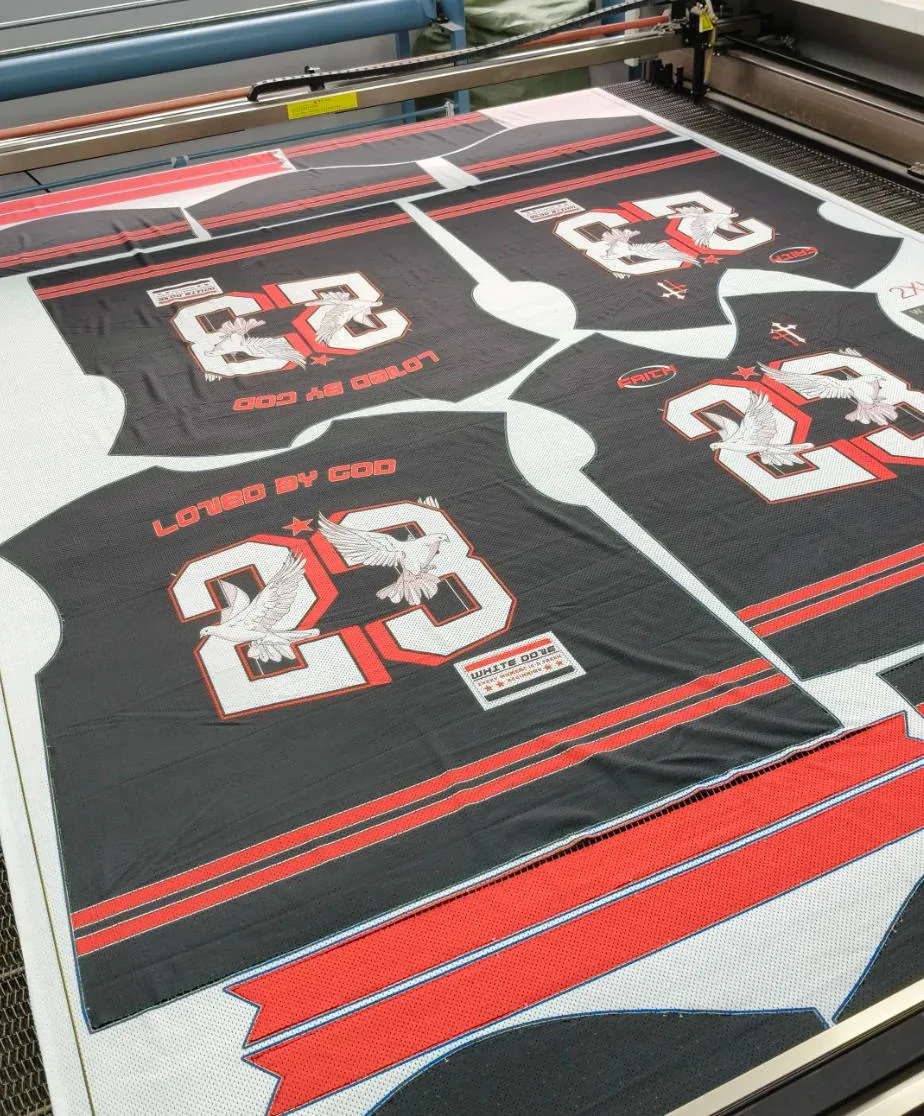
In digital sublimation, the artwork is prepared as a digital production file and printed onto the fabric panels before the garment is assembled. This makes design variation more flexible within a small order.
For example, a 10-piece sublimation project can contain 10 different designs. The pieces can also use different colors and garment styles. Sizes, player names, and numbers can be mixed rather than repeated across all 10 pieces.
That flexibility is useful when a buyer wants to:
- supply a small team with individual designs;
- test several concepts before choosing a larger range;
- order a short promotional run;
- prepare samples for different buyers or markets; or
- validate artwork and customer response without committing to one repeated design.
The 10-piece threshold does not create a fixed price. Garment construction, fabric, artwork preparation, decoration details, quantity, packaging, and shipping requirements still need to be reviewed for the quotation.
Why the Conventional Route Generally Starts at 500 Pieces
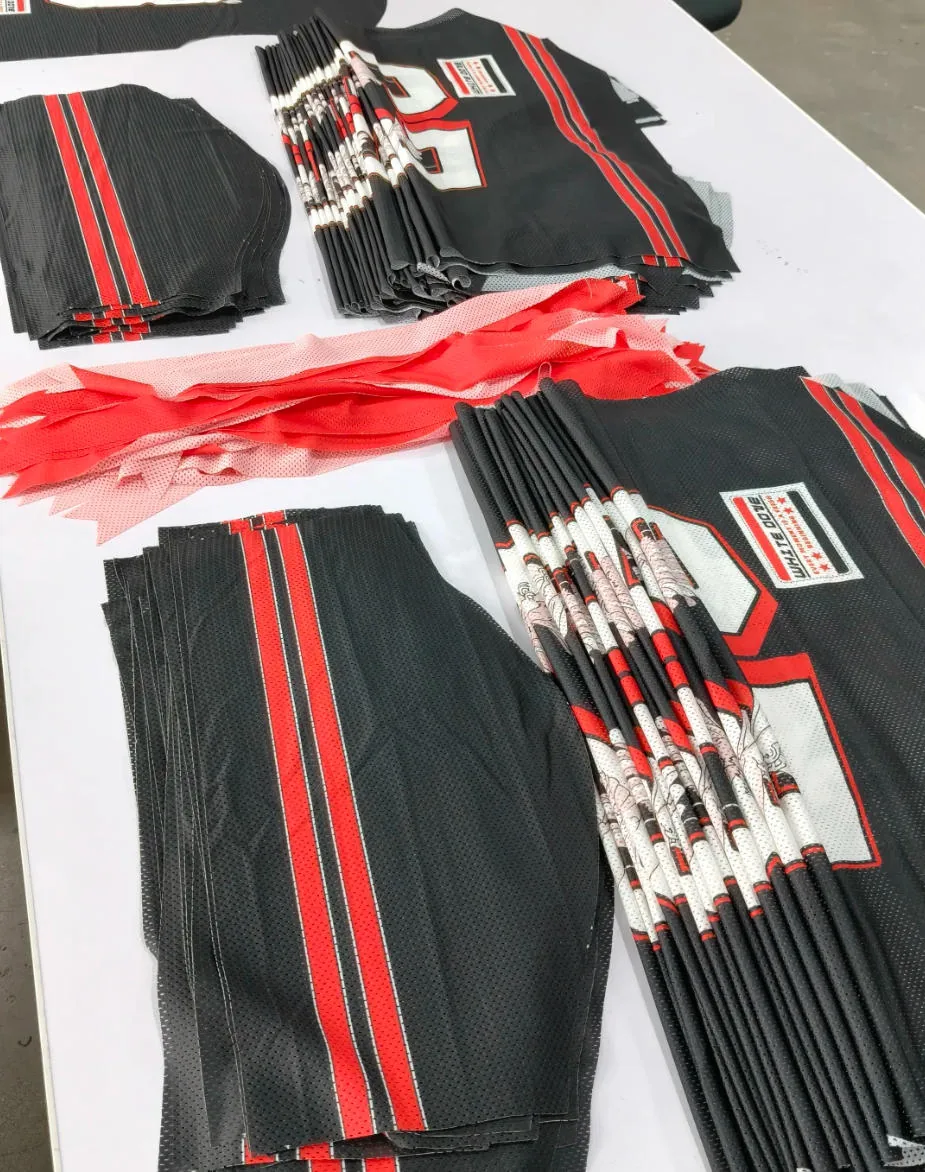
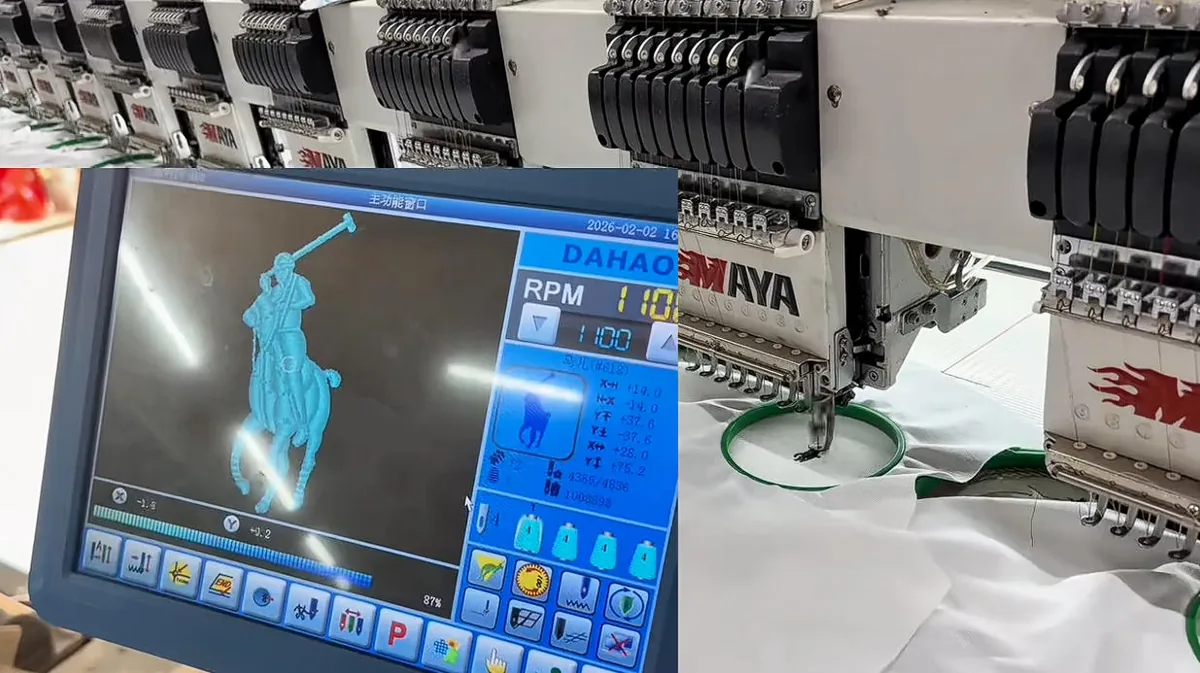
A conventional cut-and-sew project involving embroidery or other processes is organized around a repeated base garment. The normal starting point is 500 pieces for the same style, design, and color, with sizes allowed to vary.
This route can involve more setup and coordination before repeated production begins. Depending on the approved specification, the work may include pattern and cutting preparation, sewing instructions, embroidery setup, patches, labels, finishing, and packing requirements. The point of a larger run is to spread that setup across a stable production specification.
After the design and production requirements have been reviewed and agreed, the normal 500-piece threshold is generally not raised. The factory can produce the design according to the approved requirements. A later change to the material, construction, decoration, or packaging still needs a separate review because it may change the production plan or quotation.
Special projects below 500 pieces may be reviewed individually. Review does not mean automatic acceptance: the actual garment and process still decide whether the project is workable.
What “Same Style, Design, and Color” Actually Means
The 500-piece rule applies to the repeated base product, not to every line in the player roster.
Suppose a club orders one approved red jersey design in 500 pieces. The order can include different sizes and a roster of different names and numbers. It is still one base style, design, and color under this MOQ rule.
If the same buyer also wants a blue colorway or a substantially different garment construction, that should be disclosed before quotation rather than assumed to belong to the first production run.
MOQ Explains the Route, Not the Final Cost
MOQ tells you the normal starting quantity for a production route. It does not tell you the finished unit cost on its own.
The quotation may change with:
- Garment type and construction
- Fabric and material requirements
- Number and complexity of designs
- Decoration method
- Labels, hangtags, and packaging
- Quantity and size breakdown
- Destination and freight requirements
- Target date and reviewed production plan
This is why a useful enquiry includes the specification, not only “How much for 10?” or “How much for 500?” Two orders with the same quantity can have different costs when their products and requirements are different.
Can You Approve One Sample Before a 500-Piece Order?
Yes. One paid physical sample can be made before the buyer commits to a 500-piece bulk order.
Sampling gives the buyer a physical reference for the garment, construction, decoration, and appearance before the repeated production run. The sample is charged because it requires real preparation and production work for a single piece.
The sample charge may be credited against a qualifying bulk order, depending on the project conditions and final quantity. This is reviewed case by case; it should not be treated as an automatic refund.
What to Send for an MOQ and Quotation Review
Send enough information for the factory to identify the correct route:
- Sport and garment type
- Estimated total quantity
- Number of styles, designs, and colorways
- Size breakdown
- Names and numbers, if required
- Artwork or clear reference images
- Decoration, labels, and packaging
- Delivery country, postal code, and required date
AI, PDF, CDR, PSD, PNG, and other common artwork formats can be reviewed. If you are building the complete production brief, use the bulk custom jersey ordering checklist to organize the files and approvals.
Lead time is quoted according to the reviewed order. Sending the full brief first allows the factory to check the route, quantity, sample plan, cost factors, and production requirements together.
Frequently Asked Questions
What is Thajersey’s minimum order for custom jerseys?
Digital sublimation starts from 10 pieces. Conventional cut-and-sew sportswear involving embroidery or other processes generally starts from 500 pieces for the same style, design, and color. These rules apply to Custom/OEM projects and do not define the MOQ for every other order type.
Can 10 sublimated jerseys all have different designs?
Yes. A 10-piece digital sublimation order may contain 10 different designs. Styles, colors, sizes, names, and numbers may also vary, subject to the project review and final quotation.
Can sizes, player names, and numbers be mixed?
Yes. They may vary in the 10-piece sublimation route. They may also vary within a 500-piece conventional order because names and numbers can be added later while the approved base style, design, and color remain the same.
Why does the conventional route generally start at 500 pieces?
The route is built around a stable repeated garment and may require cutting, sewing, embroidery, decoration, label, finishing, and packing setup. A larger run spreads that preparation across one approved base specification.
Can I order a paid sample before 500 pieces?
Yes. One paid physical sample can be made before the bulk commitment. The sample charge may be credited against a qualifying bulk order depending on the project and final quantity, but the credit is not automatic.
Does a larger MOQ always mean a lower price?
Not by itself. Quantity affects cost, but the garment, material, construction, artwork, decoration, personalization, labels, packaging, destination, and production requirements also affect the quotation. Compare reviewed specifications, not quantity alone.
Can a special project below 500 pieces be reviewed?
Yes. Special cases may be reviewed individually. Feasibility depends on the actual product and processes, so review should not be understood as guaranteed acceptance.
Confirm the Right Route Before Planning the Order
Prepare the garment type, quantity, number of designs and colorways, sizes, personalization, artwork, decoration, packaging, destination, and required date. We can then review the MOQ, sample plan, quotation, and production route for that project.